How Yixing Teapots Are Made: The Art of Zisha Pottery
Introduction: The Allure of Yixing Teapots
There’s something almost magical about Yixing teapots. These small, often unassuming vessels have captured the imaginations of tea lovers and collectors for centuries. Handcrafted from the distinctive Zisha clay found only in the region surrounding Yixing, China, these teapots are prized not only for their beauty but also for their remarkable ability to transform the taste and aroma of tea. If you’ve ever wondered how Yixing teapots are made or why they’re so revered, you’re about to discover a world where tradition, artistry, and science blend seamlessly. Yixing teapots originated in the Song dynasty, around the 10th century, but it was in the Ming dynasty that they gained immense popularity. Scholars, poets, and emperors clamored for Yixing teapots. Their austere shapes and subdued colors varied sharply from the vibrant porcelain wares of the day. It was said that a well-worn Yixing teapot seasoned from years of steeping tea could produce a brew of such depth and fragrance, no other teapot was its equal. Today, genuine Yixing teapots continue to exemplify craftsmanship and cultural heritage. Collectors seek prized teapots from famous artisans, which have sometimes fetched large sums at auction, while tea drinkers cherish what they say is the way a Zisha teapot, after months or years of dedicated use, seems to “remember” the flavor of past brews and enhance each hour.



Table: Key Facts About Yixing Teapots and Zisha Pottery Feature: Origin | Details: Yixing, Jiangsu province, China Feature: First Appearance | Details: Song Dynasty (10th century) Feature: Main Material | Details: Zisha (purple sand) clay Feature: Unique Trait | Details: Absorbs tea flavors, enhances brewing over time Feature: Cultural Importance | Details: Essential for Gongfu tea ceremonies, prized by collectors Feature: Notable Attributes | Details: Handmade, unique lid fit, rich variety of shapes and decorations Feature: Famous for | Details: Long-lasting quality, ability to “season” with use Quote: “A teapot is a teapot, yet a Yixing teapot is poetry in clay.” — Traditional Chinese saying In this article, you’ll learn exactly how Yixing teapots are made, what makes Zisha pottery so exceptional, and why these teapots have become legendary among tea aficionados worldwide. Along the way, we’ll answer every question you might have about the art, science, and soul behind these remarkable vessels.
What is zisha clay?
The most important part of how Yixing teapots are manufactured is the legendary Zisha clay, or “purple sand” clay. This natural material is only found in the hills surrounding Yixing, a small city in China’s Jiangsu province. The geology of the region is unique, and results in deposits of clay that are rich in kaolin, quartz, mica, and iron oxide. These trace minerals are responsible for the favorable qualities of Zisha: porosity, heat retention and an understated earthy color that becomes even warmer with age.
Types of Zisha Clay
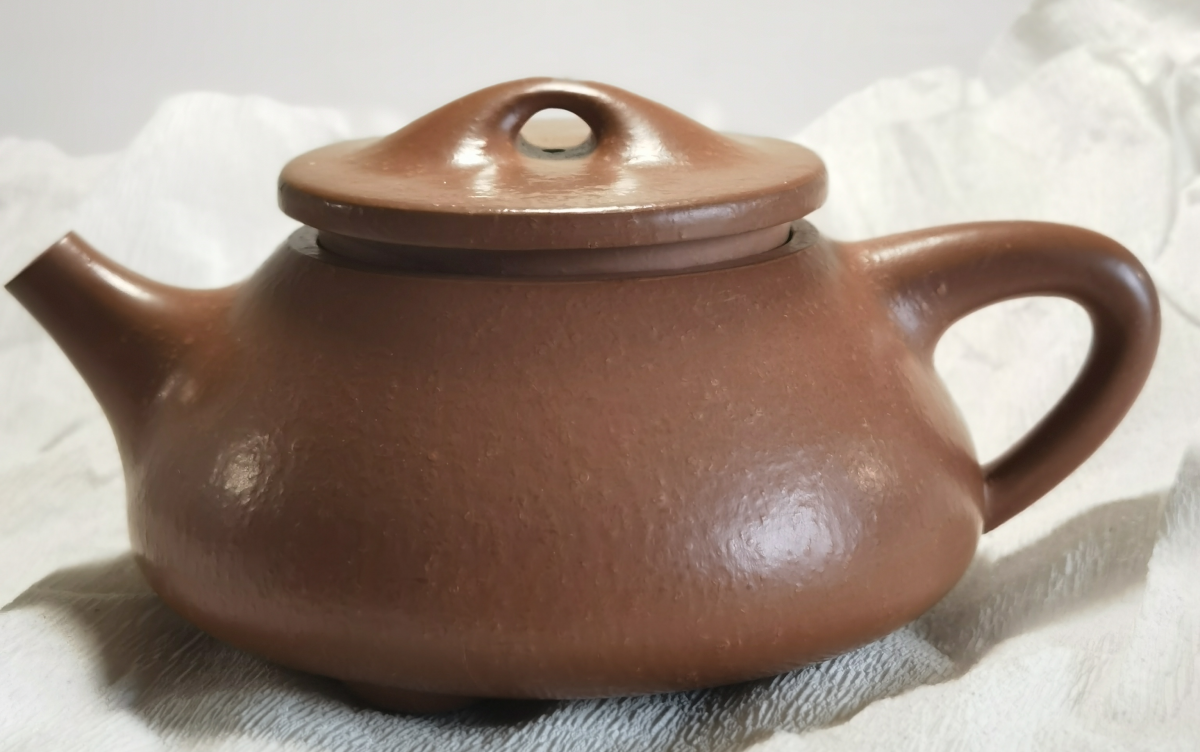
There are three primary varieties of Zisha clay: Zini (Purple Clay): The traditional and most common form of Zisha, this purple-brown clay deepens in color as it ages. Hongni (Red Clay): Bright red and finely textured, this clay fires to a smooth and lustrous finish. Duan Ni (Yellow/Green Clay): Rare, pale, and sandy-textured, this greenish-yellow clay is especially prized.
Table: Key Properties of Zisha Clay Types Clay Type: Zini | Appearance: Purplish-brown | Texture: Medium | Porosity: Moderate | Rarity: Common Clay Type: Hongni | Appearance: Bright red | Texture: Fine | Porosity: Low | Rarity: Less common Clay Type: Duan Ni | Appearance: Yellow/greenish | Texture: Sandy/coarse | Porosity: High | Rarity: Rare What makes Zisha clay special is its micro-porous structure. The clay absorbs and releases tiny amounts of both water and air as the teapot is heated and cooled, creating an excellent environment for infusing tea leaves. Over time, a well-used Yixing teapot will develop a beautiful luster and will subtly “remember” the teas it has prepared, deepening and enhancing the flavor of each brew.
Why Zisha Clay Is So Revered
Fun Fact: Geological studies show that Yixing’s Zisha clay deposits are over 300 million years old! Because genuine Zisha is only found in this small area, it’s a finite and precious resource. In short, Zisha clay is not simply an ordinary pottery substance. It’s the soul of every genuine Yixing teapot and the precise reason why these teapots have been able to become the worldly standard for tea brewing.
A Step-By-Step Guide: How Yixing Teapots Are Made
Whether it’s an amateur hobbyist turning piles of inexpensive blocks into rudimentary clay kettles in a DIY home studio or an esteemed master at a state-of-the-art corporate studio—making Yixing teapots is a serious endeavor, involving processes that span days if not months. Over hundreds of years this process, passed down through generations, has become both art and labor of love, bringing clay together with the craftsman’s vision. Below is a step-by-step guide on the main processes involved in creating a Yixing teapot—a complex series of interactions that mystically turns Zisha clay into art.
Harvesting, processing and kneading Zisha clay
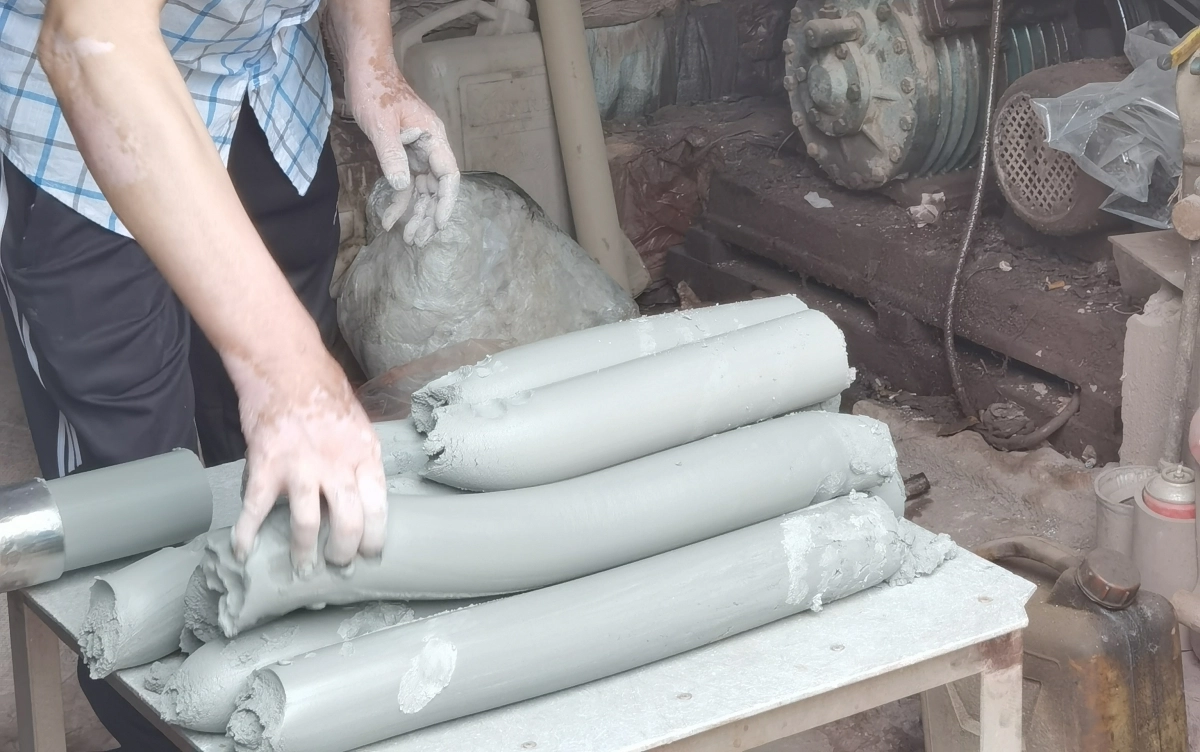
The creation of a Yixing teapot begins underground. The clay is mined or harvested by either artisans or miners from the hills of the Yixing area, in which it has sat for millions of years. The clay is harvested in big, rocky chunks, and is either manually or mechanically crushed to a course gravel. It is then left to weather naturally outside for between a couple of months to several years. Over time, the grains of clay lose impurities and soften. This results in enhanced properties of plasticity that makes the clay easier to manipulate into shape when pressure is applied without it cracking or otherwise deforming. After aging, the clay is broken up by hand or with crude tools, and sifted to remove any stone or other impurities. The clay is then steeped in water, kneaded and filtered again. In processing we insure its uniformity and blend so as to give a smooth even texture. When is it ready to use? When it feel nice, when it looks right. “I can’t tell you more exactly than that,” a potter will say. The clay just has to be “made” to a smooth, consistent texture, gritty yet plastic enough to work with easily.

Fact: Conventional Yixing workshops pass down secret recipes and techniques for preparing clays, and some families have guarded their process for centuries.
Forming and Shaping the Teapot
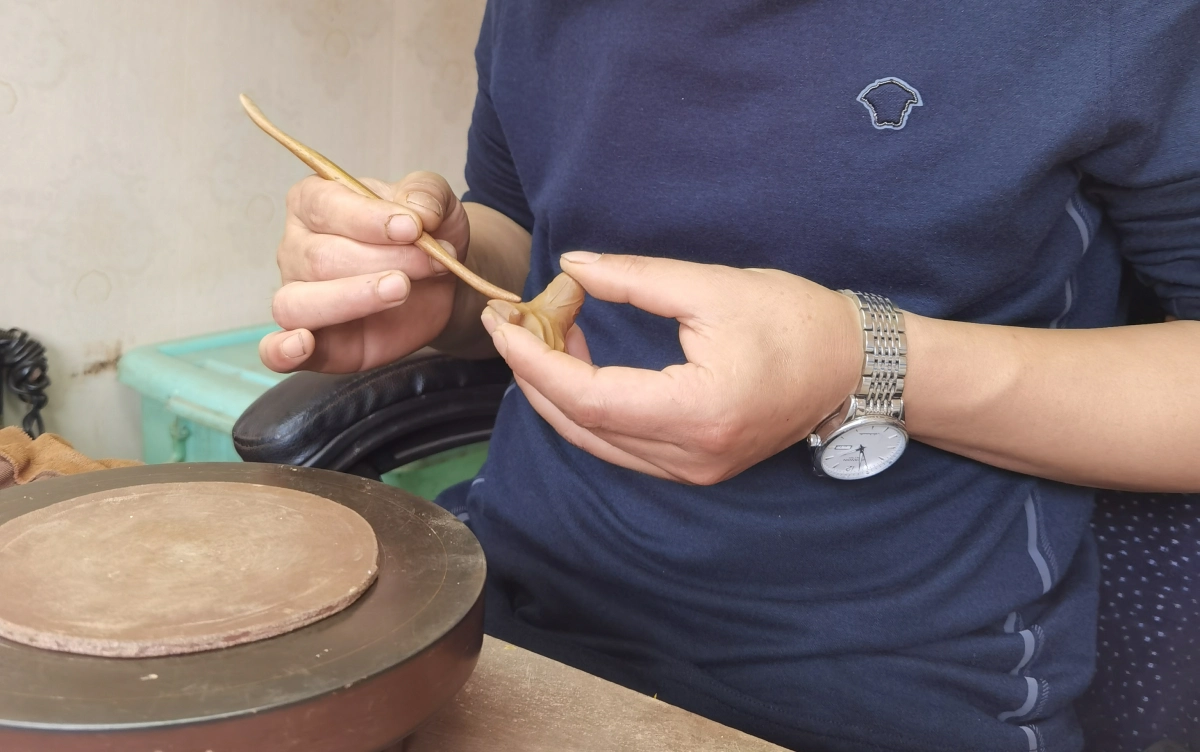
Unlike most ceramics that are thrown on a potter’s wheel, real Yixing teapots are manually molded with wooden paddles and the help of metal scrapers and delicate carving tools. The process is entirely manual, and requires years of apprenticeship to master. Here’s how the main parts of a Yixing teapot come together: Body: The potter rolls out a slab of clay and forms it into a cylinder, then carefully smooths and shapes it into the desired silhouette. Spout and Handle: Each is crafted separately, then attached to the body using more clay as a kind of “glue.” Fitting the spout and handle so they align perfectly is a delicate operation—one wrong move, and the teapot may pour unevenly or feel awkward in the hand. Lid: Perhaps the most challenging part, the lid must fit so snugly that it creates an airtight seal, but not so tight that it can’t be removed easily. The best Yixing teapots emit a crisp “ping” sound when the lid is spun—a mark of perfect craftsmanship.
Diagram: Parts of a Yixing Teapot Part: Body | Function: Brews and holds tea Part: Spout | Function: Guides the tea out Part: Handle | Function: For pouring safely Part: Lid | Function: Seals in aromas
Carving, Decorating, and Assembling
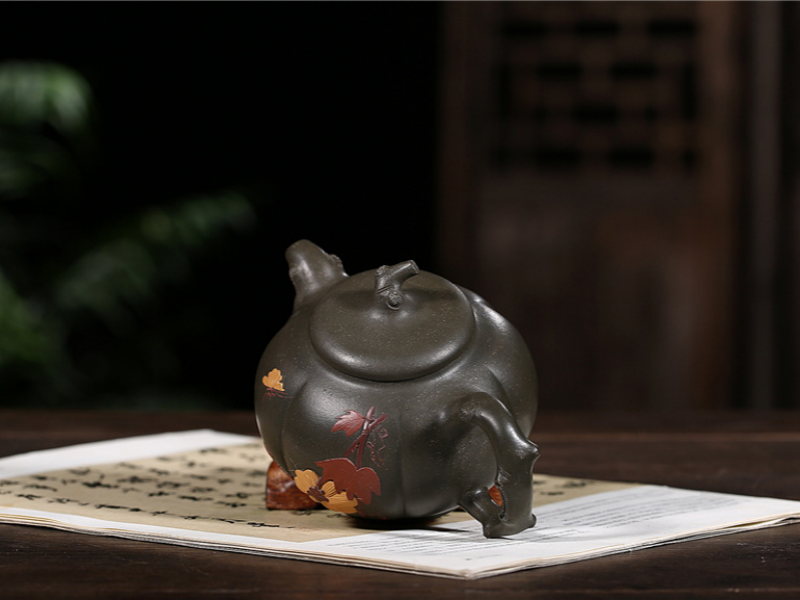
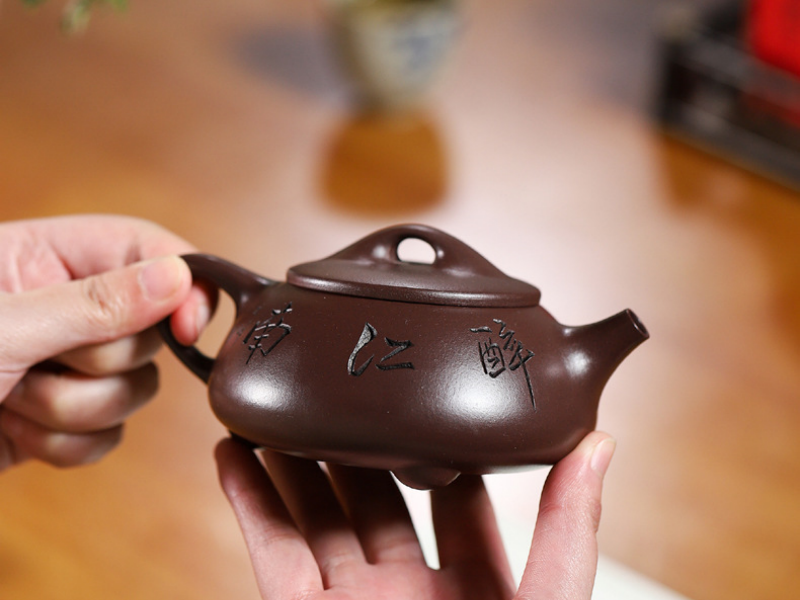
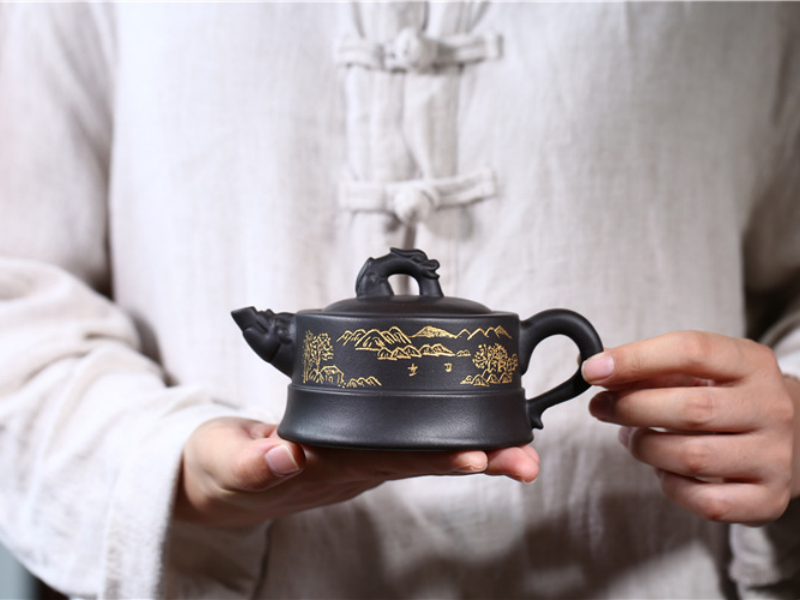
Once the basic structure is in place, artisans may add decorative touches. Some teapots are left plain, letting the natural beauty of the Zisha clay shine. Others feature: Carved calligraphy: Poetry, artist’s signatures, or auspicious symbols are etched using fine tools. Relief designs: Raised patterns depicting flowers, dragons, or landscapes. Inlays: Sometimes gold, silver, or colored clay is pressed into the surface for contrast. Assembly is extremely precise. All pieces are assembled flawlessly, while maintaining high levels of beauty and craftsmanship. Craftsmen ensure proper alignment at each step of the way, test the fit and integrity of lids, handles, buttons, and spouts before assemblies, and naturally smooth away any excessive clay, fingerprints, or seams by hand, without using any tools.
“Every Yixing teapot has its maker’s spirit and level of skill stamped on it.” — Master potter Zhang Shouzhen
Firing and finishing
After the form has been constructed, it is air-dried for several days up to several weeks to prevent cracking during firing. Once dry the pot is placed in the (bone-dry) kiln and fired. Yixing clay is typically fired at 1100–1200°C (about 2000°F) The firing of the clay instigates a chemical reaction within the clay that grants the teapot its final characteristics (hardened clay, final coloration, and texture). The firing process itself lasts up to 24 hours. In modern Yixing workshops the kilns may be fired by electricity or gas, but some potters work with traditional wood-fired dragon kilns, which can subtly but significantly affect the finished appearance and character of the pot. After finishing firing, the craftsman examines the teapot for imperfections, polishes it using agate stones or sandpaper, and sometimes applies a faint rub of oil to bring out its luster. The final product is a work of patience, creativity, and the timeless art of Zisha pottery.
Table: Traditional vs. Modern Kilns in Yixing Pottery Kiln Type: Dragon (Wood) | Fuel: Wood | Resulting Finish: Varied, unique, traditional | Notes: Adds character, unpredictable Kiln Type: Electric/Gas | Fuel: Electric/Gas | Resulting Finish: Consistent, controlled | Notes: Used for precision In every true Yixing teapot lies a story in clay and fire—one told by hands that treasure the past, while crafting heirlooms for the future.
How to Identify Authentic Yixing Teapots
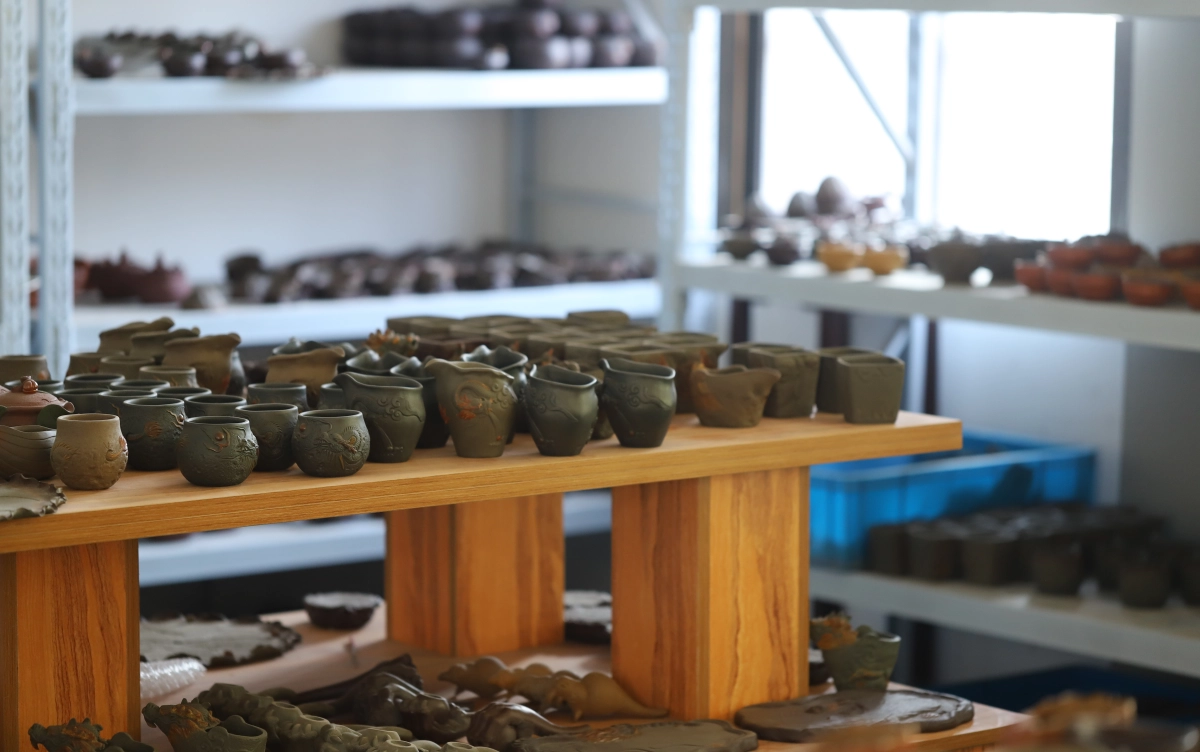
Not all teapots which are marked as “Yixing” are equal. With the high demand of Yixing teapots, there are so many teapot forgeries and imitation products on the market. They can range from poor quality mass-produced ceramics to utter forgeries. Understanding how to recognise a real Yixing teapot – ie. one which is made from actual Zisha clay and shaped by an adept hand – is an important skill for tea drinkers and collectors alike.
Key Traits of Real Zisha Teapots
Material: Real Yixing teapots are not glazed and have a natural, earthy colour. The surface of the clay will be slightly rough, never shining. The lustre of the teapot will deepen with use and, when lightly tapped, the teapot should emit a crisp, clear sound (not a dull thud). Craftmanship: Seams between the body and spout/handle/lid should be difficult to see, and the fit of the lid needs to be so perfect that you could flip the teapot upside down without it falling (but can still remove the lid smoothly). The pour of the spout should also be smooth, with no dribbling. It’s common for the potter to place a seal on the base of the teapot (or inside the lid) as a mark of pride and accountability. Weight and Thickness: Real Yixing teapots are relatively light in weight for their size. The walls of the teapot should be thin but sturdy. If the teapot is thicker and/or heavier than expected, the teapot may be a forgery or a poor quality item. Scent: A new Zisha teapot is not supposed to have any unpleasant chemical smell, but instead a faint, earthy aroma. This is the scent of a natural unglazed clay teapot. Price and Origin: While there are still opportunities to find a great deal, genuine Yixing teapots (especially ones created by reputable artisans) can be very costly. If a deal sounds too good to be true, it most likely is. Remember to ask for evidence of the teapot’s origin or artisan whenever possible.
Checklist: Spotting a Genuine Yixing Teapot [x] Natural clay – unglazed surface [x] Precise, seamless craftmanship [x] Perfect fit – smooth pouring [x] Artisan’s seal/marking [x] No chemical scent [x] Reasonable weight/thickness
Common Signs of Good Craftsmanship

Lid Fit: When you rotate the lid back and forth, if it spins easily, without rocking from side to side, and creates an effortless “ping” sound, you have a great pot. Balance: The teapot must be easy to handle and not cumbersome when full. Evenness: The body, spout and handle are all even and proportionate.
Table: Authentic vs Imitation Yixing Teapots Feature: Material | Authentic Yixing: Zisha clay, unglazed | Imitation/Fake: Glazed, coloured or ‘mixed’ Feature: Craftsmanship | Authentic Yixing: Hand-shaped and seamless | Imitation/Fake: Moulded, visible seams Feature: Lid Fit | Authentic Yixing: Airtight, spins smoothly | Imitation/Fake: Loose or too tight Feature: Scent | Authentic Yixing: Earthy, natural clay | Imitation/Fake: Chemical, plastic or odourless Feature: Markings | Authentic Yixing: Artisan’s seal | Imitation/Fake: Generic or missing Feature: Price | Authentic Yixing: Higher but justified by craftsmanship | Imitation/Fake: Low, mass-market
Case Study:
A collector purchased two “Yixing” teapots online. The first teapot came from a a trusted Chinese pottery shop and was unglazed with a sandy texture, had a perfect lid fit and an artisan’s mark. The second teapot came from a bargain retail website and had a shiny glazed look, weighed more than expected and emitted a strong chemical scent. After months of use, the first teapot developed a deep lustre and made fragrant and clear tea, but the second teapot did not improve with use and even left a lingering plasticky taste in the tea liquor.
Quote: “A true Yixing teapot is not only a tool for tea, but a companion for a lifetime.” — Li Changhong, Zisha Pottery Master By learning these signs and following your senses, you’ll be able to find a Yixing teapot which is not just a teapot, but a piece of living history, ready to enrich your experience with each steep.
Taking Care of Your Yixing Teapot
Owning a real Yixing teapot is like owning a classic car: it pays to care for it well and use it often. Zisha teapots aren’t just vessels for brewing tea. As you continue to brew multiple types of tea in them, they take on their own unique patina, soaking up the subtleties of each tea’s flavor and fragrance. Proper care will ensure that your teapot will reward you with an enhanced tea experience for generations to come.
How to Season a New Yixing Teapot
A new Yixing teapot needs to be “seasoned” before its first use. This seasoning process will remove any residual clay flavor from pot and prepare the clay to soak up the tea oils. 1.Rinse and Inspect: Check the teapot for any extra clay (dust or particles) and rinse with warm water. 2.Boil the Teapot: Place teapot (and its lid) in a pot of boiling water for 30–60 minutes. This will open the clay’s pores and remove any unwanted odors. 3.Brew with Tea Leaves: Empty out the water, then fill the teapot with the type of tea you intend to brew most often (e.g. oolong or pu’er). Pour boiling water over the leaves and let steep for an hour. Repeat this step 2 or 3 times. 4.Rinse and Air Dry: Rinse the pot with hot water (never use soap) and air dry completely.
Tip: Always dedicate your Yixing teapot to one type of tea. The porous clay absorbs tea oils, so switching between teas will muddle the flavors.
Cleaning and Storing Zisha Teapots
Common Mistakes to Avoid
Switching tea types in the same pot Scrubbing with abrasive pads or brushes Storing a wet teapot with the lid on
Table: Dos and Don’ts for Yixing Teapot Care Do: Season before first use | Don’t: Use soap or harsh chemicals Do: Dedicate to one tea type | Don’t: Brew multiple teas in one pot Do: Rinse with hot water only | Don’t: Scrub with abrasive tools Do: Air dry completely | Don’t: Store with lid on when wet
Quote: “A Yixing teapot is like a diary—every cup you brew adds a new page to its history.” — Tea Collector’s Proverb By following these simple yet crucial steps, you’ll ensure your Zisha teapot matures beautifully, delivering deeper and richer flavors with every cup. Over years of careful use, your teapot becomes a cherished companion, whispering the story of every tea you’ve ever enjoyed.
Why Zisha Pottery Matters in Tea Culture
Across centuries and continents, the Yixing teapot has achieved almost mythical status among tea aficionados and collectors. But beyond its beauty and craftsmanship, why does Zisha pottery matter so profoundly in tea culture? The answer lies in a unique blend of tradition, chemistry, and human experience.
The Importance Of Yixing Teapots In Chinese Tea Culture
Yixing teapots are an essential part of the Gongfu tea ceremony, a ritualized process of making tea that prioritizes ceremony, mindfulness and the careful extraction of flavors from the tea. The Gongfu tea ceremony requires the utmost precision, from the temperature of the water, to the type of tea used, to the order and way it is poured, and significantly, the vessel used. Clay, specifically zisha clay teapots, are valuable thanks to their heat retention and micro-porous nature which allow long periods of steeping time, care, and precision needed to ensure the tasting of the best flavors whilst extracting tea of delicate nature, like oolong, pu’er and black tea.
What Makes Yixing Teapots So Important for Gongfu Tea?
How Zisha Empowers the Tea-Drinker
The physics of how Zisha clay improves tea is interesting. With its singular mineral content and microstructure Zisha clay can: 1.Absorb tea oils: Over time, the tea oils fix themselves to the interior of the pot, where they build up a kind of “memory” of tea flavors. 2.Neutralize or mellow a tea: Zisha clay softens astringency, rounding out tannins and extracting subtle aromas and sweetness. 3.Maintain a stable temperature: Consistent temperature enables a smooth cup with an even extraction.

Table: Impact of Zisha Clay on Tea Flavor at Different Stages of Usage Years of Usage: 1 | Aroma Intensity: Medium | Depth of Flavor: Moderate | Smoothness: Good Years of Usage: 5 | Aroma Intensity: High | Depth of Flavor: Deep | Smoothness: Excellent Years of Usage: 10+ | Aroma Intensity: Exceptional | Depth of Flavor: Profound | Smoothness: Silky The longer a Yixing teapot is used for one type of tea, the richer and more satisfying the brew will be.
Cultural and Artistic Significance
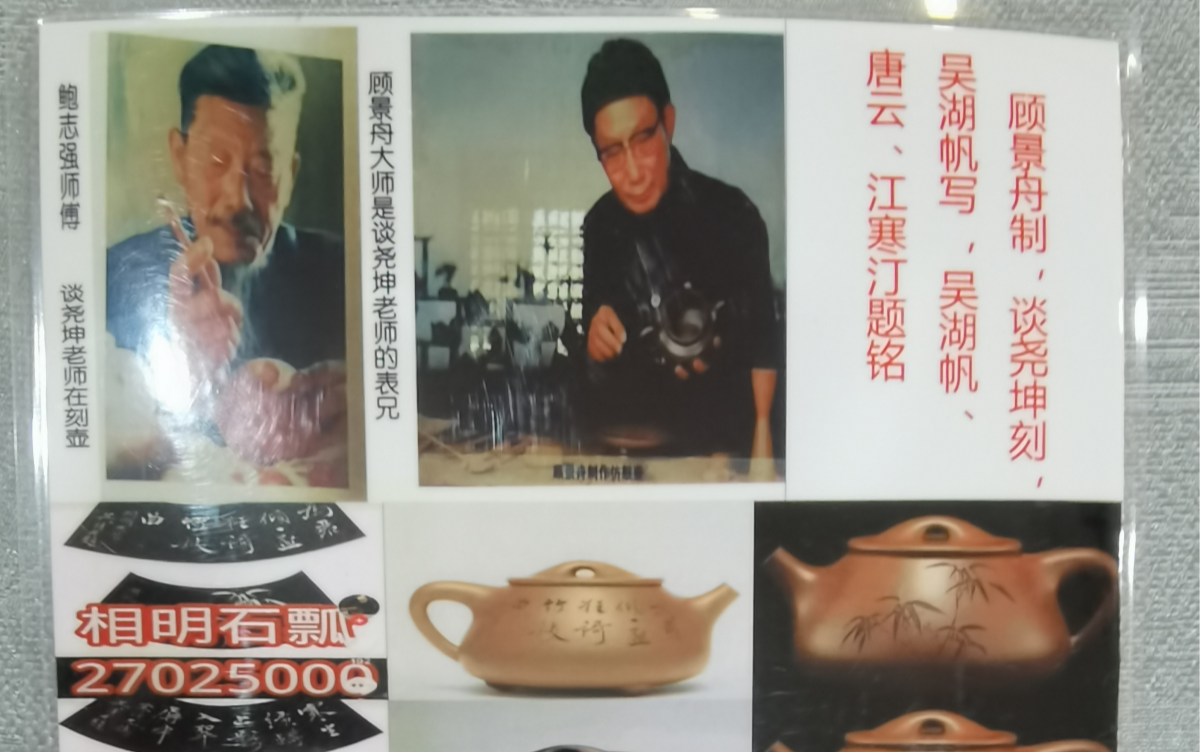
Zisha pottery is more than utilitarian: it is a living art form. A teapot is a blank canvas for the artist who molds it. The forms, decorations, and inscriptions they choose reflect their aesthetic vision, regional styles, and the trends and concerns of their times, such as the cultural fashions and political struggles of the Ming and Qing dynasties, and the literary and scientific ambitions of modern China. Other artistic visions seek to transcend the moment, drawing on Buddhism, Daoism, and classical literature. Individual collectors can explore a new range of aesthetic possibilities by ordering custom teapots that commemorate special occasions or represent their own creative thought.
A zisha teapot used to brew puerh tea “The teapot is small, but inside it is a world of mountains and rivers.”— Chinese Proverb
Why Collectors and Tea Lovers Prize Yixing Teapots
In the end, the art of Zisha pottery is not simply about crafting teapots; it’s about preserving a tradition that unites people, cup by cup, generation after generation.
Conclusion: The Enduring Art of Yixing Zisha Pottery
The story of how Yixing teapots are made—the art of Zisha pottery—reveals far more than a simple process of shaping clay into vessels. It’s a tale of geology, tradition, skill, and a deep cultural reverence for the humble act of brewing tea. Each authentic Yixing teapot is a masterpiece, shaped by hands that carry forward hundreds of years of knowledge and artistry. The rare Zisha clay, aged and prepared with care, is brought to life by artisans who pour their hearts into every detail, from the teapot’s elegant silhouette to the perfectly fitted lid. Over time, these teapots become more than objects. They’re companions in daily ritual, keepers of flavor, and silent witnesses to conversations, celebrations, and quiet moments alike. In the hands of a devoted tea drinker, a Zisha teapot matures, developing a lustrous patina and a flavor memory unique to its owner. No other vessel offers this blend of function, beauty, and living history.

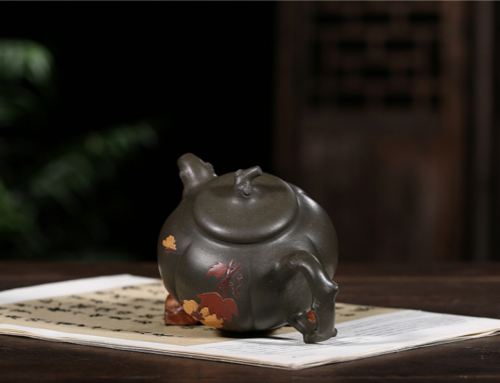
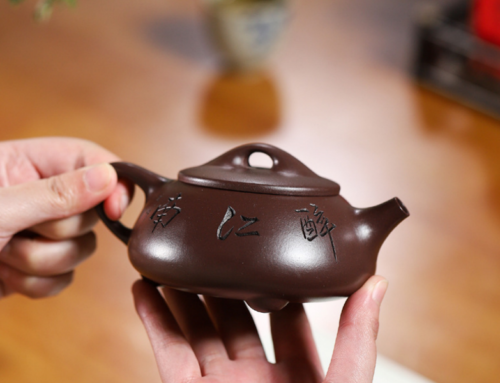




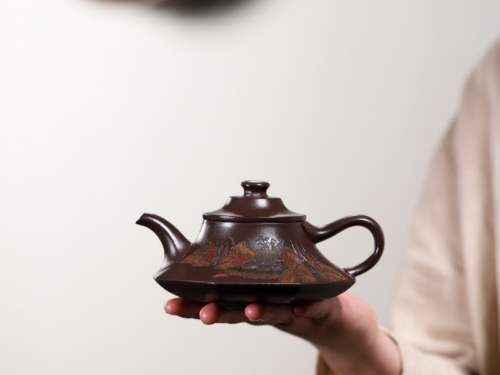 yixing purple clay teapot Imperial Phoenix Tail